Digital Assets are Changing the Way Money Moves Around the World
Simon Yi
Co-Founder Myosin.xyz
Mar 17, 2026
Money is no longer just a ledger entry inside a bank. It’s becoming software. And software, once deployed at scale, changes behavior before it changes balance sheets.
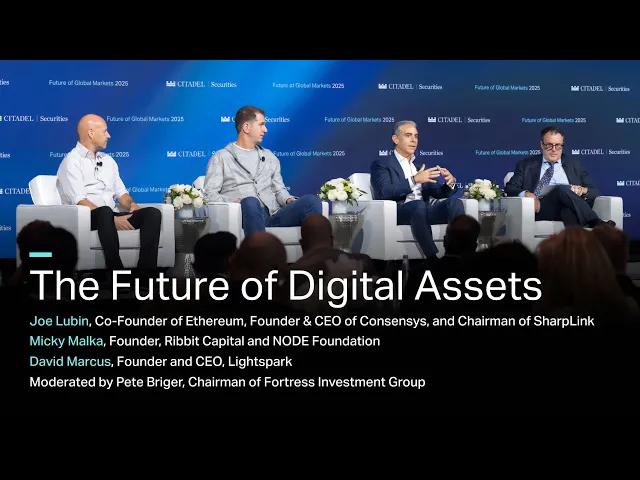
That was the underlying current of a recent panel moderated by Pete Briger of Fortress Investment Group, featuring David Marcus (CEO of Lightspark, former PayPal and Meta executive), Micky Malka (founder of Ribbit Capital), and Joe Lubin (co-founder of Ethereum and CEO of ConsenSys).
The theme was simple but profound: digital assets are not just a new asset class. They are reshaping how money moves, how trust is constructed, and how culture expresses value.
Culture Moves First. Capital Follows.
Micky Malka framed the conversation with a reminder that cultural shifts precede financial ones. Younger generations are native to online networks. They coordinate in Discords, express identity through memes, and transact in digital environments without friction.
In that context, Bitcoin, stablecoins, NFTs, and prediction markets are early expressions of a deeper shift: financial systems adapting to digitally native behavior. Ignoring this shift is not conservatism. It is blindness to where capital is heading.
At Myosin, we think about this through a GTM lens. Behavior changes first. Infrastructure follows. Then the institutions reorganize around it.
That is exactly what we are watching unfold.
Decentralized Trust as Infrastructure
Joe Lubin expanded on the concept of trust.
After the 2008 Global Financial Crisis, faith in centralized institutions fractured. In response, Bitcoin emerged as the first rigorously decentralized trust system. Ethereum extended that logic beyond money into programmable coordination through smart contracts.
Lubin introduced the idea of “trustware”: protocols that embed trust directly into economic systems rather than relying on intermediaries to behave correctly.
This matters even more in an era defined by artificial intelligence. As centralized software and AI systems grow more powerful, the question becomes: who do they serve?
Decentralized protocols provide a counterweight. They are neutral, transparent, and verifiable by design. In a world where centralized actors like AI labs and chip manufacturers shape global systems, decentralized trust becomes not just useful, but necessary.
Bitcoin as the Settlement Layer of the Internet
David Marcus focused on the structural inefficiencies of today’s financial plumbing.
Domestically, payments may feel instant. Internationally, they are not.
Cross-border money movement still relies on correspondent banking networks and systems like SWIFT. Transactions can take days, cost $50 or more, and only settle during business hours.
Marcus argued that Bitcoin’s neutrality and decentralization position it as a global settlement layer, similar to how TCP/IP became the invisible foundation of internet communication.
In this model, value moves over the Bitcoin network in seconds. It then interfaces with domestic payment rails on either side. The result is global settlement at pennies instead of dozens of dollars.
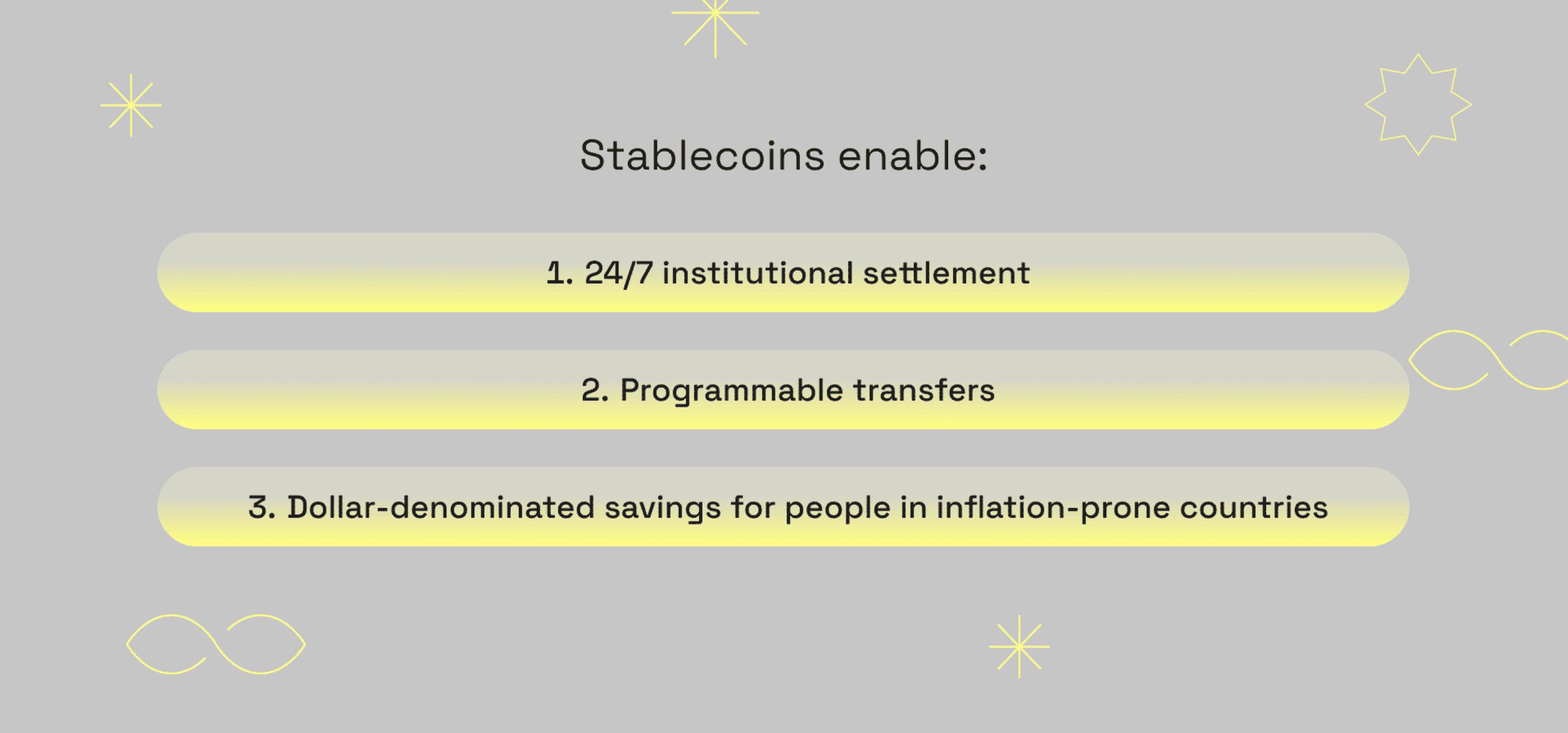
In markets where local currencies are unstable, access to digital dollars is not a speculative play, but a necessary component of financial survival.
A Layered Future of Digital Money
The panel described an increasingly stratified monetary landscape:
Central bank digital currencies (CBDCs) at the wholesale level
Tokenized bank deposits for regulated environments
Stablecoins functioning like digital cash
Bitcoin and Ether as censorship-resistant monetary assets
These are not mutually exclusive systems. They will interoperate like a layered stack, with each layer serving a different risk profile and regulatory context. Together, they form a more flexible financial architecture than the one we inherited from the 20th century.
Tokenization: Every Company Becomes a Token Factory
Malka proposed a useful framework with three core token types:
Identity tokens
Knowledge or expert tokens
Asset tokens
Tokenization will not remain confined to crypto-native projects. It will embed itself into infrastructure for identity verification, automated payments, contractual enforcement, and even governance will increasingly operate through tokenized systems.
The insight here is structural. Every company is becoming a token factory. The question is not whether tokens exist. It is how they are designed and what behaviors they incentivize.
Regulation and Real-Time Compliance
On regulation, the panel converged around a pragmatic view: same risks, same rules.
Marcus emphasized that real-time financial systems require real-time compliance. Malka highlighted that smart contracts can enforce rules upfront, reducing the need for after-the-fact enforcement.
In other words, compliance does not disappear. It becomes embedded into the system itself. That shift alone has the potential to reduce fraud, lower operational overhead, and increase transparency.
The Big Picture
What ties all of this together is the re-architecture of trust.
Bitcoin and Ethereum introduced decentralized trust foundations. Stablecoins operationalized digital dollars. Tokenization is expanding financial logic into identity and coordination. AI is accelerating everything.
Money is becoming programmable. Trust is becoming verifiable. Settlement is becoming continuous.
For institutions, this means rethinking treasury, payments, and capital formation. For emerging markets, it means access to global liquidity. For builders, it means designing systems where incentives and transparency are aligned by default.
At Myosin, we see this as more than another market cycle. It is a structural migration.
When culture moves online, money follows. When money becomes software, the system itself changes.
The question is not whether digital assets will shape the future of finance.
It’s how quickly institutions adapt to a world where trust is no longer granted to intermediaries, but encoded into the infrastructure itself.


