Learn how Founder-Led Marketing builds trust, shapes narrative, and gives protocols a lasting advantage.
Bridget Mao
Fractional CMO
Mar 23, 2026
Nobody talks about this, but the protocols that win aren't the ones with the best tech. They're the ones where you know the founder's name before you know the token ticker.
Ethereum didn't win because of the EVM. It won because a 19-year-old wrote for Bitcoin Magazine for two years before he shipped a single line of Solidity. By the time Vitalik published the whitepaper, he'd already built trust with an audience that believed he could see the future.
That was founder-led marketing — using the founder's voice as the primary growth engine for the project. And in crypto, where 63% of Americans still say they have low confidence in the entire asset class while 30% already own it, that voice isn't optional. It's the only thing that closes the gap between usage and belief.
Brand Accounts Don’t Build Belief. People Do.
People don't tune out your protocol. They tune out your brand account.
Employee and founder content receives 8x more engagement than the same message posted from a company channel. For newer companies without years of brand equity, company accounts barely register. This is true across all of tech, but it's especially brutal in crypto, where trust is the scarcest resource and every project sounds the same on paper.
The founders who understand this have an asymmetric advantage. Not because they're better marketers. Because they're willing to do the thing most founders won't: think in public before the thinking is finished.
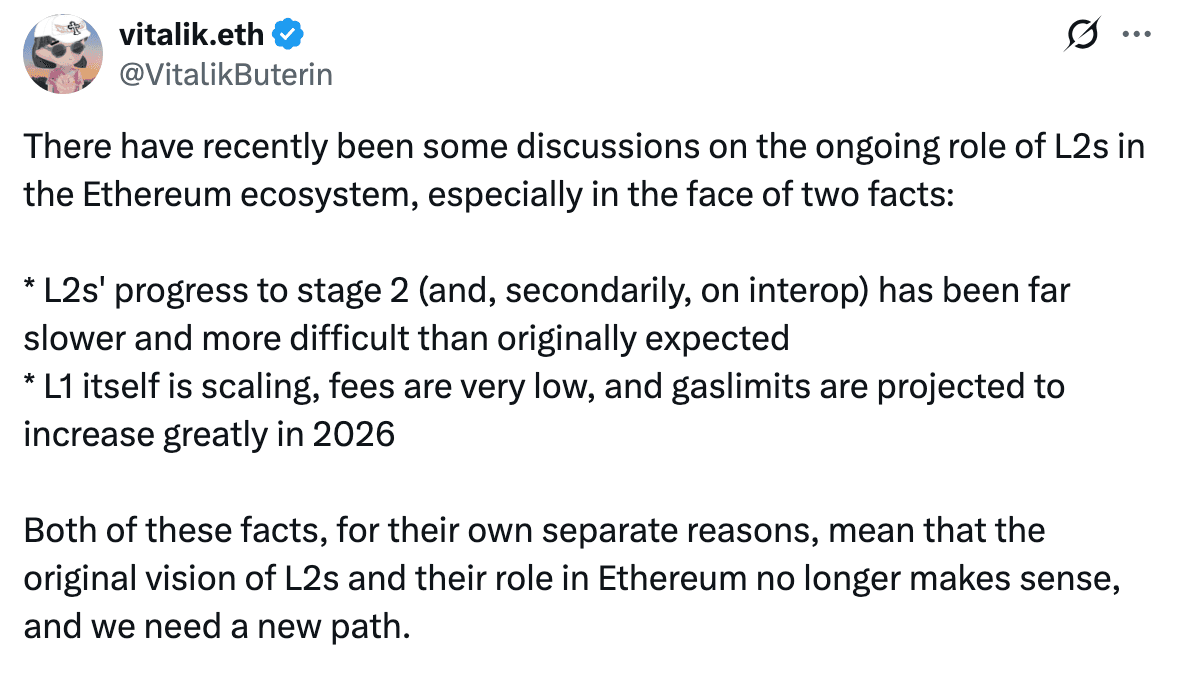
When Vitalik posted his critique of Ethereum's L2 strategy in February 2026 — arguing the original rollup-centric vision "no longer makes sense" and that L2s prioritizing their own regulatory needs over decentralization should stop claiming they're "scaling Ethereum" — he wasn't announcing a product. He was processing a problem out loud. Polygon shifted its messaging. Base reframed its narrative. One founder thinking publicly redirected billions in ecosystem strategy.
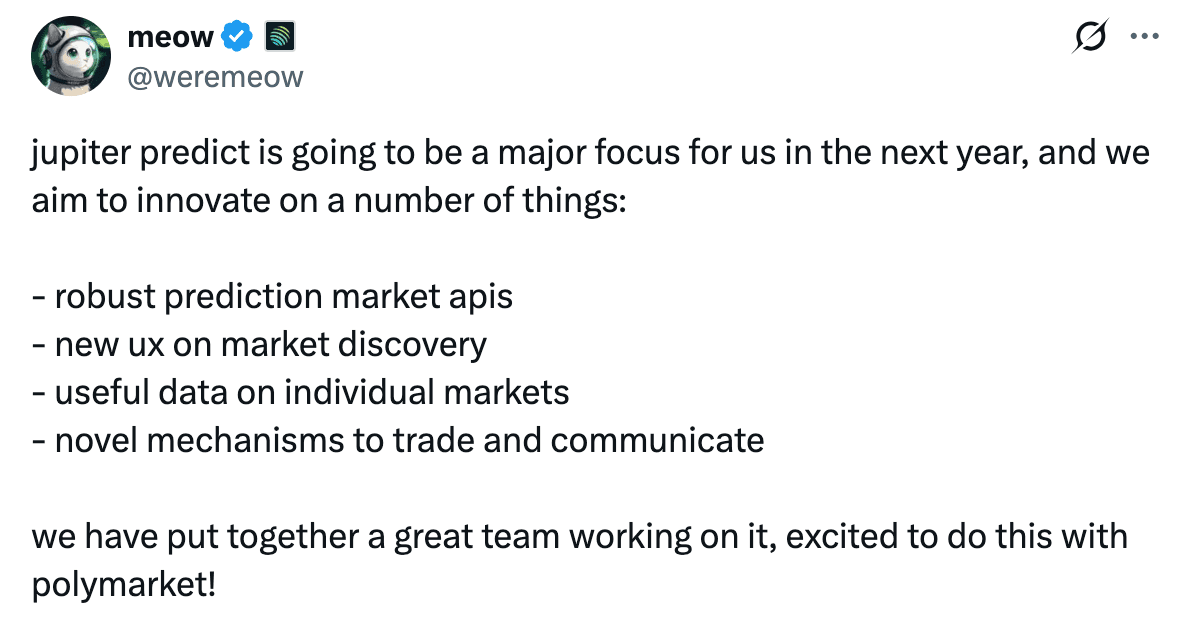
Meow, Jupiter's founder, does this differently but to the same effect. When he outlined why prediction markets would be Jupiter's next major focus, he didn't drop a press release. He shared the roadmap as a series of thoughts — APIs he wanted to build, UX problems he was obsessing over, mechanisms he hadn't figured out yet. His community didn't just learn the plan. They watched the plan being made. By the time Jupiter integrated Polymarket, his audience was already invested in the outcome.
That's the mechanism. Founder-led marketing isn't broadcasting announcements. It's inviting people into your decision-making process. And that invitation creates something no ad spend can buy: psychological commitment. Once someone watches you wrestle with a problem, they become a stakeholder in your solution.
Thinking in Public Is the Growth Engine
But thinking publicly is only one dimension. The founders who build real audience loyalty also do something most corporate accounts structurally cannot: they take positions and show vulnerability.
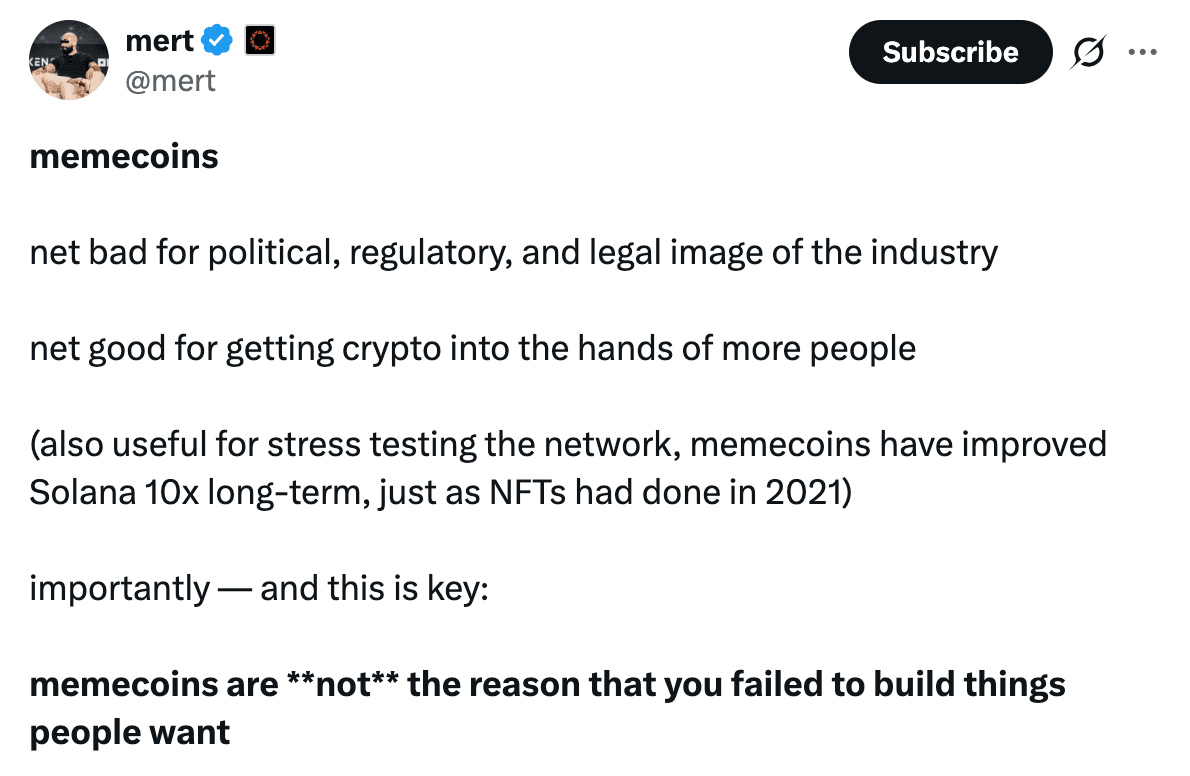
Mert Mumtaz at Helius waded into the firestorm when Solana co-founder Anatoly Yakovenko called memecoins and NFTs "digital slop" with no intrinsic value — on the very chain where memecoins generate 62% of dApp revenue. Where others picked sides, Mert did something harder: he held both truths at once. Memecoins are "net bad for political, regulatory, and legal image of the industry," he wrote, but "net good for getting crypto into the hands of more people." Then the knife twist: "memecoins are not the reason that you failed to build things people want. PMF is hard, blaming the lack of it on shitcoins is easy." The technical depth earns trust. The personality earns affection. Helius became Solana's default infrastructure provider partly because Mert made himself impossible to ignore.
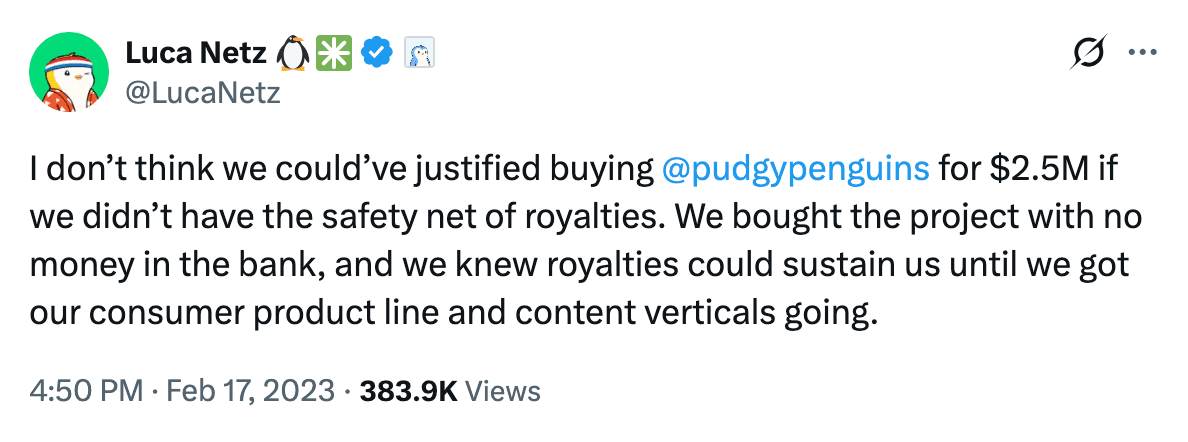
Luca Netz bought Pudgy Penguins for $2.5 million when the project was considered dead. He's talked openly about buying it "with no money in the bank," relying on royalties to survive until the consumer product line got off the ground. Three years later: $50 million in revenue, toys in Walmart and Target, a DreamWorks partnership. That vulnerability didn't weaken his story. It became the story. People root for founders they've watched struggle. They don't root for logos.
There's a name for this in psychology — the pratfall effect. Competent people become more trustworthy when they show imperfection. Vulnerability from someone clearly competent reads as confidence, not weakness. And companies can't replicate it. That asymmetry is the entire edge.
Trust Compounds. Silence Does Too.
Here's what most founders miss about all of this: it compounds.
Psychologist Robert Zajonc demonstrated that mere repeated exposure increases trust, even at a subconscious level. Every time your name appears in someone's feed with a thoughtful take, you're building familiarity they don't even notice forming. Six months of consistent founder content doesn't just create "more content." It creates a trust layer that no competitor who stayed silent can match.
And the reverse is also true. Every week you don't publish, someone with half your insight is building the audience that should be yours. Every day your ideas live only in your head and your docs, they're at risk of being articulated first, by someone who understands them less deeply than you do.
The cost of silence isn't zero. It's compounding.
Founder-Led Marketing Is a Strategic Weapon
Founder-led marketing isn't just personal branding. It's not about follower counts or becoming a "thought leader." It's about using the one asset your company has that nobody can replicate — you — as the primary channel for building trust, shaping narrative, and creating the kind of audience loyalty that converts into community.
You already have the hardest thing to build: domain expertise and a working product. The only missing piece is letting people hear you think.
Your protocol isn't your product. You are.


