Why analytics platforms are becoming the new distribution channels for trust
Dana Bernard
Myosin Contributor
Jan 20, 2026
Crypto marketers love to think they can rely on storytelling and narrative alone. Truth is those assumptions can unravel quickly. Marketers and sales teams alike cannot expect their audiences to simply “trust them” when citing adoption and growth metrics. In a fully transparent and auditable ecosystem, over reliance on vanity metrics can lead to lost trust and a broken narrative. Too often this looks like hype fueled launches citing major adoption gains that trail off as campaigns end and incentive dollars dwindle.
If you can't back your claims with onchain receipts, you're gambling with credibility.
As institutional adoption fuels the growth of decentralized finance, high-quality and consistent data remains the holy grail for blockchain networks and issuers. BD teams need verifiable stats and marketers need to tell the story of distribution and volume. Consistent data and quality analytics are marketing channels that warrant more attention from crypto marketers to deepen trust and gather higher quality leads.
How Transparency Became Crypto’s Marketing Advantage
Transparency has always been native to blockchain networks. Public ledgers operate continuously, without permission, and expose activity in real time. This architecture changed how financial systems work, and it also changed how growth itself is observed and evaluated.
As networks like Ethereum scaled into the hundreds of billions in onchain volume, the challenge shifted. Growth was visible, but not easily interpretable. Raw data alone doesn’t tell a story. It needs context, synthesis, and credibility. This is where analytics became a strategic layer for marketing and GTM teams.
What Web2 treated as “data as a service,” Web3 has pushed further. Real-time, auditable data now shapes how narratives form, how markets signal confidence, and how trust propagates across ecosystems. In practice, this means that growth stories increasingly originate not from brand channels, but from neutral data surfaces that others rely on.
The New Data Infrastructure: Where Marketing Meets Verification
Companies like Messari, Dune, and The Tie are capitalizing on growing interest and product growth across crypto use cases. With an ecosystem that is increasingly reliant on multi-chain bridges powered by critical infrastructure like oracles, analytics is a growing marketing channel and platform model. Backed by verifiable and auditable data, marketers can surface insights faster than using established and more traditional channels like reports, events, and platforms recognized broadly by media outlets.
Messari State of Crypto Traditional finance has solidified the reach that in-house research teams can have on institutional finance. Messari has brought this approach to web3 with deep dives on all things crypto with releases focused on stablecoins, chain focused highlights, and emerging technologies like RWAs and AI. Taking a broad approach to mapping and tracking the growth and diversification of onchain asset classes, volume, and market demand, Messari has positioned itself as the central source of truth backed by a suite of institutional offerings.
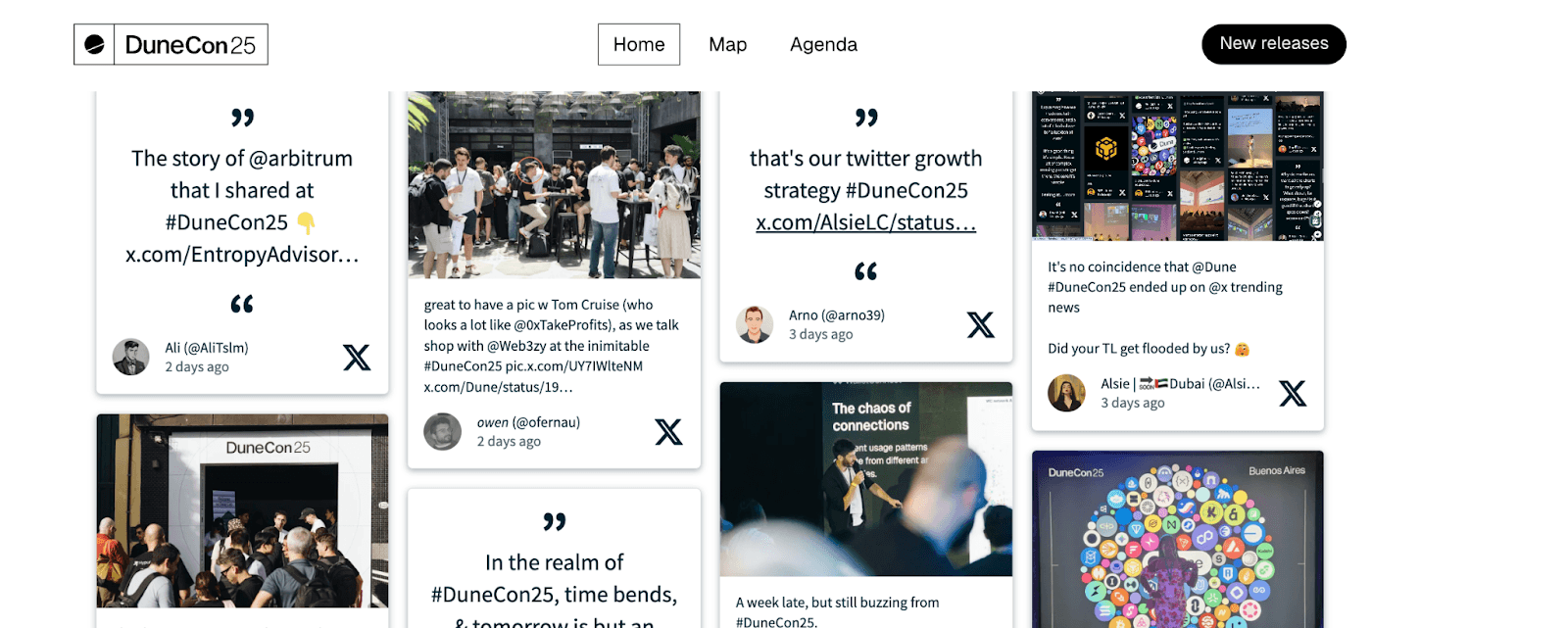
DuneCon25 In addition to Myosin’s on the ground activations in Buenos Aires, Dune brought together the industry’s leading research teams to discuss data stacks, AI-enabled marketing, and growth tactics all powered by real-time data. Hosted alongside DevCon, arguably the largest gathering of crypto developers in the world with over 14,000 attendees, Dune continues to bring the importance of data to the forefront.
With a focus on institutional investors, The Tie offers institutional-grade terminal services to Wall Street and global financial markets. As tokenized assets grew to $8B in 2025, The Tie has leveraged the Terminal to provide infrastructure for token offerings, trading and distribution analytics. Through event activations like the Bridge and Tie Labs, The Tie takes those services one step further to arm and inform marketers on how to bring their work to market.

Looking ahead: a channel strategy shift
The shift toward data-driven marketing isn't about adding another tool to your stack, it's about recognizing that transparency has fundamentally changed the rules of engagement.
The best marketing amplifies what the data already shows. This doesn’t mean every campaign needs to be data-heavy. It means understanding that analytics platforms, research reports, and public dashboards are distribution channels in their own right, often with more credibility than paid media or owned content. These distribution channels have engaged, sophisticated audiences actively looking for signals within the noise. Marketers should treat these channels as strategic opportunities for amplification. This means partnering with data teams who understand how to make your metrics discoverable, engaging with the analysts creating dashboards about your sector, and ensuring your blockchain data tells a compelling story when others look for it.
As the ecosystem matures and paid media becomes increasingly competitive, some of your most effective organic marketing can happen when data teams find your story worth telling.
For marketers this means analytics is no longer just a reporting layer. It is part of the distribution stack.


